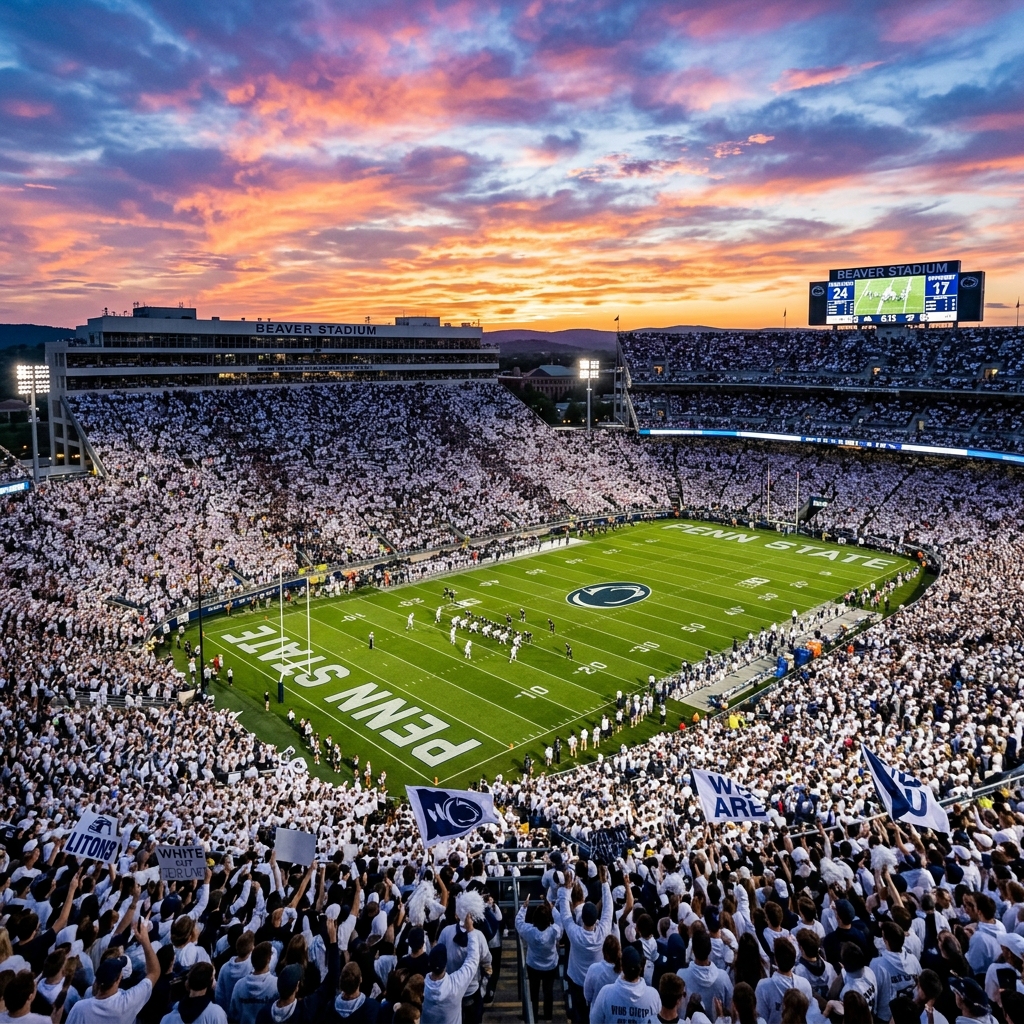
Penn State’s annual Pro Day took place on March 18, 2026, inside Holuba Hall, giving draft-eligible Nittany Lions another platform in front of NFL talent evaluators. The useful takeaway is narrower than a final draft verdict: the workout added public testing and participation data for players who still needed measurables, medical follow-up, or position-drill exposure.
From a roster evaluation standpoint, Pro Day results are a data point rather than a complete evaluation. They can validate or complicate what shows up on film, but hand times, drill settings, and medical context still need to be weighed carefully.
The Speed Validation: Ross and Pena
The most concrete testing notes came from the perimeter. Wide receivers Devonte Ross and Trebor Pena did not receive invitations to the NFL Scouting Combine in Indianapolis, leaving their straight-line speed to be measured during the school workout window.
On Wednesday, both receivers posted useful testing numbers. Ross recorded the fastest 40-yard dash of the day at 4.45 seconds and added a 36-inch vertical jump with a 10-foot-8 broad jump. Pena logged a 4.52-second 40, a 35.5-inch vertical, and a 10-foot-3 broad jump.
The Analytic Takeaway: Ross’s 4.45 speed supports the vertical-threat profile he showed on film, but it should not be treated as a full draft evaluation by itself. For Penn State’s current receiver room, the cleaner lesson is that verified speed matters because the 2026 offense still needs perimeter separation around Rocco Becht.
The Franchise Passing: Allar Returns to the Field
The most watched event of the afternoon was not a sprint, but a throwing session. Quarterback Drew Allar opted to throw passes for NFL scouts after missing the end of the 2025 season with a lower-body injury.
Allar elected not to run the 40-yard dash or participate in agility drills, so the workout should be read as a passing update rather than a complete athletic or medical clearance.
The Analytic Takeaway: Allar’s throwing session gave scouts a live look at his arm and movement in a scripted setting. It did not, by itself, answer every medical question. For Penn State’s depth chart, the more important update is that Allar was fully in the draft process and no longer part of the 2026 quarterback competition.
The Medical Checkmarks: Singleton and Ioane
The Pro Day was also notable for who was limited. Running back Nick Singleton did not participate in on-field drills while recovering from the foot injury reported during the Senior Bowl process.
Singleton did participate in the bench press, which gave teams at least one testing data point while his lower-body recovery continued. Until team visits or medical updates are confirmed by multiple reliable sources, the safer public takeaway is that his evaluation depended heavily on medical review and private team work.
Conversely, offensive lineman Vega Ioane used the Pro Day to add position-drill work after a limited testing profile at the NFL Combine. His eventual first-round selection confirmed how strongly NFL teams valued the broader body of work, not just one school workout.
Why Pro Day Results Need Context
Pro Day numbers are useful, but they are not a complete evaluation. Hand-timed speed can vary by setting, surface, scout, and start technique. The more reliable takeaway is whether the athletic result matches the film profile. Ross testing like a vertical threat matters because his on-field role already suggested that kind of acceleration. Pena posting strong explosion numbers matters because it supports the idea that his separation ability is functional, not just scheme-created.
Allar’s throwing session belongs in a different category. For quarterbacks returning from lower-body injuries, scouts are not only watching arm strength. They are watching whether the player can transfer weight, reset his base, and throw with timing after movement. A clean throwing day does not answer every medical question, but it gives teams a better data point than rehab clips or second-hand reports.
Singleton’s limited participation is also not automatically negative. Running backs with established explosive traits often have less to gain from rushing back into testing while recovering from a foot injury. The key questions for teams are medical clearance, pass protection, receiving value, and whether the burst returns during private workouts. Penn State fans should read the Pro Day as a partial update, not a final verdict on draft position.
Sources and update notes
Workout numbers and draft participation were checked against public Pro Day tracking from StateCollege.com, Sports Illustrated, Centre Daily Times, official draft coverage from NFL.com, and team context from GoPSUSports football. Any listed 40 times, jumps, visits, or medical notes should be revised if official measurements or team confirmations differ from public reports.