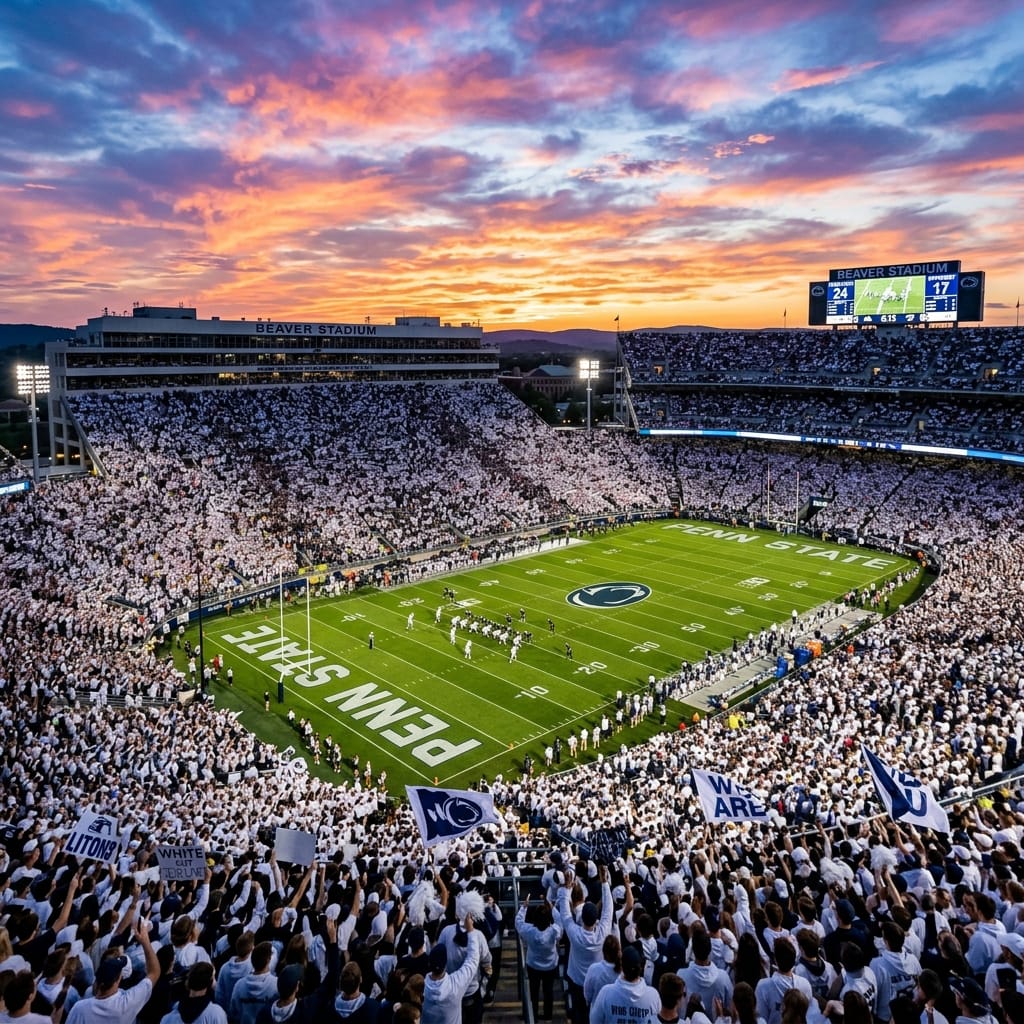
Penn State beat Minnesota 42-14 on November 14, moving to 6-4 overall and 3-4 in the Big Ten. Its third consecutive win secured bowl eligibility. The Penn State recap and Minnesota recap record the result.
For the depth chart, this game offers three useful updates: another productive two-back rotation, meaningful late-game work for Alex Manske, and fresh contributions from the defensive front. It does not establish a new permanent two-deep.
Hansen Led Yardage; Wallace Led Carries
Carson Hansen gained 126 yards on 12 carries, including a 46-yard touchdown. Cam Wallace had 15 carries for 82 yards and caught a one-yard touchdown. James Peoples added four rushes for 12 yards and a receiving score, according to the official box score.
The split matters more than a simple RB1 label. Hansen generated the larger rushing total with fewer attempts, while Wallace handled more carries. At Washington, Hansen had led both categories. This is a changing workload, not evidence that the staff has assigned one back every opening series, passing situation or short-yardage possession.
The running-back tracker now carries the Minnesota sample. Carry totals describe touches, not pass-protection snaps or the full offensive workload.
Becht Remains the Starter; Manske Adds Recent Game Evidence
Rocco Becht went 9-for-15 for 84 yards with three touchdown passes and added a rushing touchdown. Manske completed both of his throws for 38 yards, including a 22-yard touchdown to Peoples. The official scoring record and Penn State recap agree on the distance.
Manske entered in the fourth quarter with Penn State leading 35-14. That gives the quarterback tracker newer reserve evidence than the season opener. It is not a quarterback-change announcement, and a late-game series does not establish how the staff would handle every close-game replacement scenario.
Tight Ends Supplied the Receiving Production
Benjamin Brahmer caught two touchdown passes. Andrew Rappleyea led the team with four receptions for 45 yards. Those outcomes make the tight ends central to the pass-catching tracker, even though Penn State attempted only 17 passes as a team.
Low passing volume limits conclusions about receiver hierarchy. A player with few or no catches is not automatically demoted, and a touchdown total is not a target share. Minnesota is a new game sample rather than a reason to erase Sowell’s Washington return.
Defensive Depth Beyond the Headline Score
Kooper Ebel led the team with nine tackles and recovered an opening-drive fumble. Cam Smith made eight tackles; Tony Rojas had six. Alexander McPherson, Ibn McDaniels and Dallas Vakalahi each recorded a sack. Minnesota finished with just 41 rushing yards.
Onward State’s game account also describes the early defensive pressure and the short fields that helped the offense. Ebel’s recovery and the subsequent special-teams play changed field position before the lead expanded. The defensive performance was not just a matter of the offense holding the ball.
For the defensive tracker, Smith and McPherson provide useful additional production to follow. Tackles and sacks alone cannot establish snap shares, and the late-game rotation should not be presented as a new starting lineup.
Rutgers Is Next; Minnesota Injury Tags Stay With Minnesota
Rutgers visits Beaver Stadium on November 21 for the final home game. The official schedule still lists the kickoff time as TBD in the November 15 check, while Onward State’s recap lists 3:30 p.m. ET. The schedule hub retains TBA until the kickoff is consistently confirmed.
Howard was listed out for Minnesota. The November 14 game-day report also listed Bacon and Joseph out, with Goodman and Cooper game-time decisions. Those designations are now archived game context. They do not establish Rutgers availability or a return timetable.