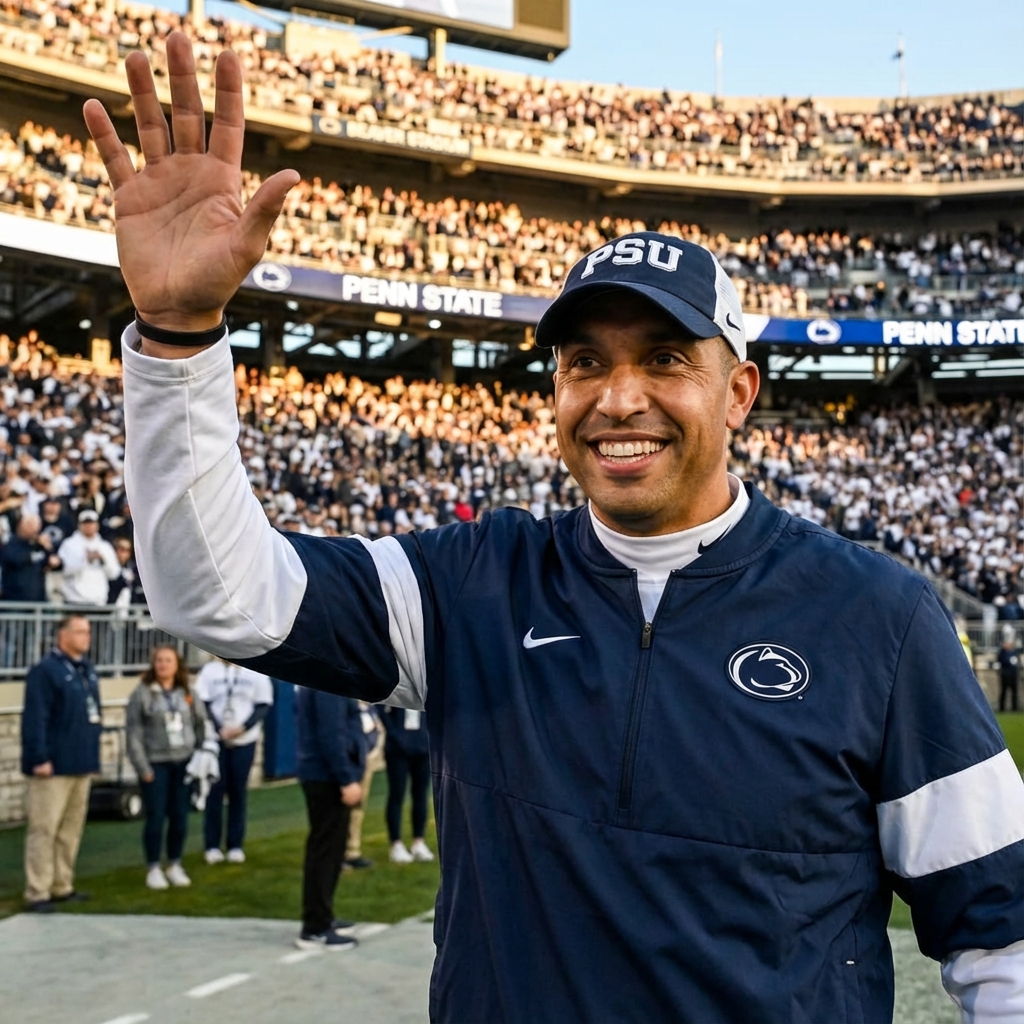
Penn State’s January transfer window closed with a roster that looked very different from the one Matt Campbell inherited. The broad point is clear and well supported by public roster movement: Campbell leaned heavily on transfer additions, including players familiar with his Iowa State system, to stabilize the first spring in State College.
The exact headcount was harder to freeze in January. Transfer portal entries, walk-on movement, early enrollees, scholarship status, and roster publication timing could all change the number before spring practice. No single January transfer total describes the full 2026 roster.
What Is Safe To Say
Penn State added a large group of transfers and newcomers before spring practice. Several came from Iowa State or had direct familiarity with Campbell’s staff, which helped explain the “Ames East” shorthand that appeared in local and fan coverage.
The most important addition was quarterback Rocco Becht. Quarterback continuity matters more than almost any other transfer move because it can speed up offensive installation. Becht arrived with prior knowledge of Campbell’s program and Taylor Mouser’s offensive expectations, giving Penn State a clearer starting point after Drew Allar moved into the NFL Draft process.
The Nittany Lions also added players from outside the Iowa State connection, including defensive back Omarion Davis and defensive tackle Dallas Vakalahi. Those additions mattered because Penn State was not only changing coaches. It was also replacing NFL Draft departures and transfer losses across multiple position groups.
Why The Numbers Should Stay Flexible
College football rosters are not static in January. A player can enroll, leave, change scholarship status, or be added to the official roster later.
The safer wording is that Penn State entered spring with a transfer-heavy reset and a large group of newcomers. That accurately captures the football reality without overstating a number that may vary by source or date.
Depth Chart Impact
The portal work gave Campbell more immediate competition, but it did not solve every roster question. Running back still had to be rebuilt after Nicholas Singleton and Kaytron Allen became NFL Draft departures. The defensive front had to replace Dani Dennis-Sutton and Zane Durant. The offensive line had to adjust after Vega Ioane and Drew Shelton moved into the draft process.
Transfers can help with those problems, but they do not automatically recreate chemistry. Offensive line communication, quarterback-receiver timing, special teams roles, and defensive calls all require practice reps. That is why the spring open-practice format mattered: the staff needed controlled evaluation more than a public split-roster scrimmage.
Sources
Roster movement should be checked against the official Penn State football roster, program updates from GoPSUSports football, and public transfer tracking from major recruiting services. This article is intended as a roster-construction recap, not a final scholarship-count document.
The current depth chart and official roster are more useful references for 2026 players than a January snapshot.