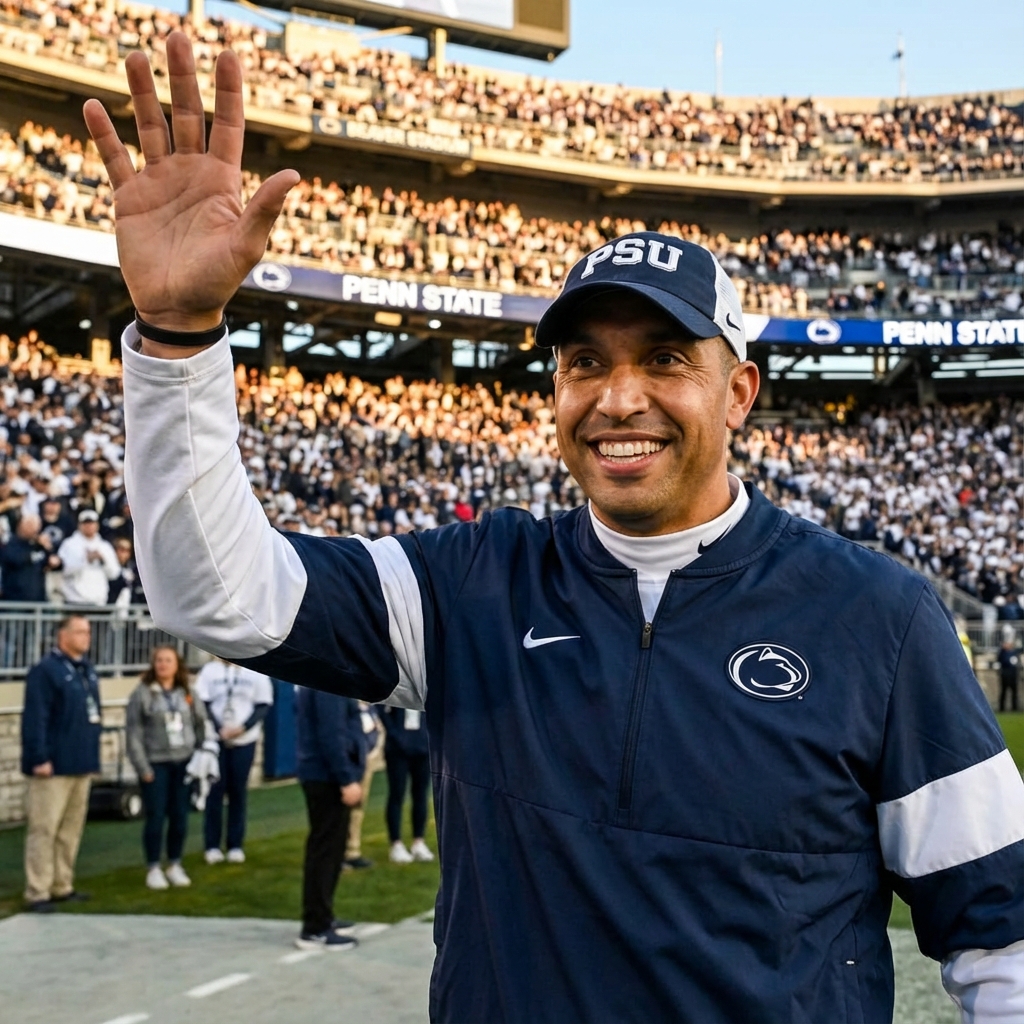
The process of building a coaching staff is rarely linear. For new Penn State head coach Matt Campbell, the construction of his 2026 staff has included both key acquisitions and departures.
In late February, the program experienced a notable exit when former Penn State quarterback and assistant quarterbacks coach Trace McSorley accepted a coaching position with the NFL’s Buffalo Bills.
A Brief Homecoming Concludes
McSorley’s transition to the professional coaching ranks ended a brief homecoming. He had been part of Penn State’s offensive support structure and carried obvious credibility as one of the program’s most important modern quarterbacks.
His rapid departure to Buffalo shifted the staff story from nostalgia toward the practical reality of coaching movement. Campbell’s staff still had to install a new offense, but it would do so without one of the clearest former-player bridges in the quarterback room.
The Quarterback Room Transition
The primary ripple effect of McSorley’s exit involves developmental continuity at quarterback.
The 2026 Penn State offense is undergoing a schematic reset with Taylor Mouser installing a new system and Rocco Becht arriving from Iowa State. With Drew Allar in the NFL Draft process, Ethan Grunkemeyer transferring to Virginia Tech, and Beau Pribula no longer part of the Penn State roster, the quarterback room needs clarity and consistent teaching behind Becht.
Losing an assistant with McSorley’s institutional knowledge removes a unique bridge between the old guard and the new scheme. For the current quarterbacks, the feedback loop now relies more heavily on the perspectives brought in by the new coaching staff.
The Necessity of Alignment
McSorley follows former wide receivers coach Noah Pauley in choosing an NFL transition over remaining in State College.
While individual career advancement is standard across the sport, these early departures place an even higher premium on alignment among the remaining coaching staff. As spring practice approaches, the schematic installation must be executed by a staff composed largely of individuals experiencing Penn State football for the first time.
Why Staff Movement Matters for the Roster
Support-staff movement can look minor from the outside, but it affects the daily experience of players. Analysts, assistants, quality-control coaches, and graduate assistants often handle the connective tissue between scheme install and player preparation. When a familiar voice leaves, the head coach has to replace both the workload and the relationship network.
For Penn State, McSorley’s departure is notable because former player credibility is difficult to manufacture. Quarterbacks and offensive skill players listen differently when instruction comes from someone who has handled Beaver Stadium pressure, postseason preparation, and NFL meeting rooms. Losing that voice does not break the staff, but it does require a deliberate replacement plan.
The practical question is how Campbell redistributes quarterback support. If the offensive coordinator absorbs more of the detail work, the staff may become more centralized. If another analyst or former player fills the role, the room can maintain a player-development layer between position meetings and individual film review. That decision matters most for young quarterbacks and transfer receivers still learning the language of the offense.
Sources
Penn State’s football site and roster provide the college context. Public team announcements and NFL transactions document professional staff movement.