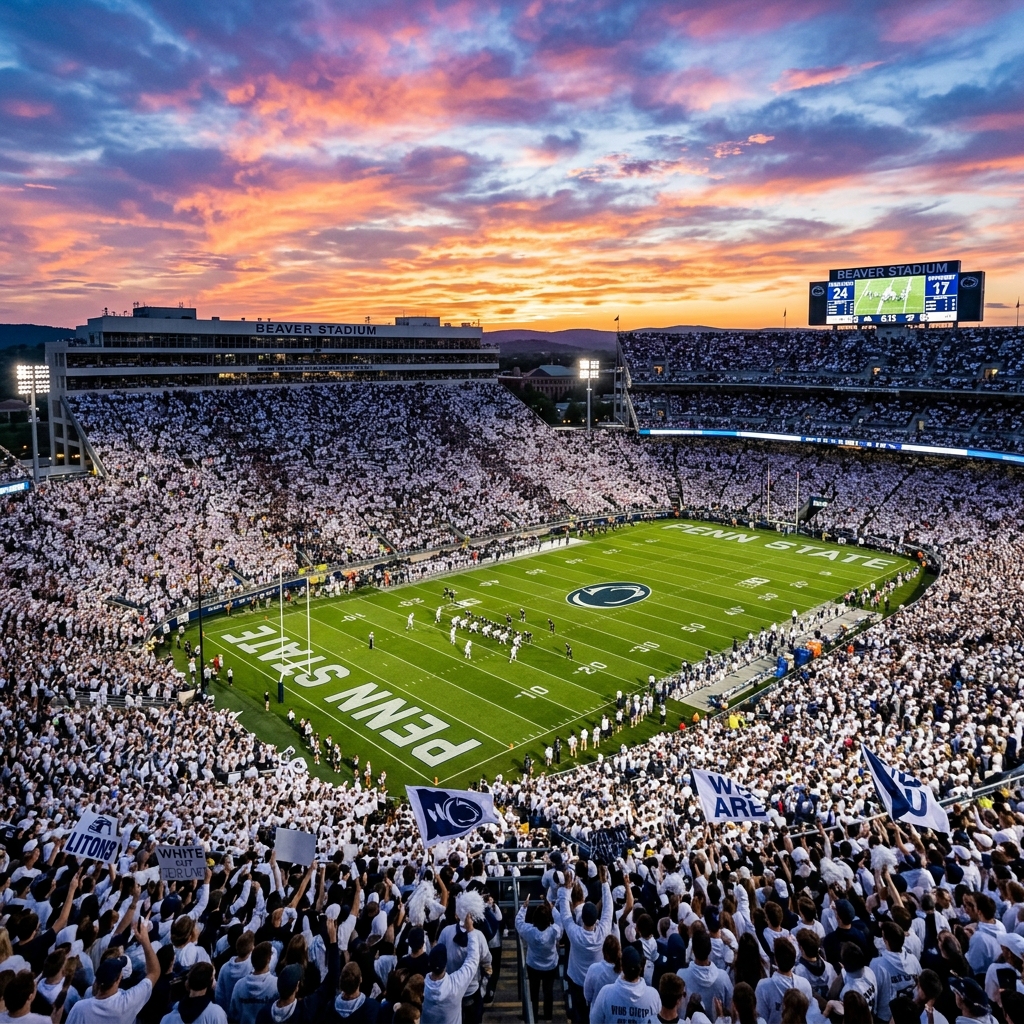
As the Matt Campbell coaching staff navigated its first spring practice in State College, a secondary objective loomed over the Lasch Football Building: building the 2027 recruiting class.
Update note, May 13, 2026: this article is preserved as a dated March recruiting-board snapshot. Penn State’s 2027 class later added multiple commitments in April and early May, including defensive lineman Stanley Montgomery.
As of late March 2026, the Nittany Lions’ 2027 commitment ledger remained at zero. Following the coaching transition, Campbell’s staff was working to establish a new recruiting base while still sorting the immediate roster.
The clearest path to igniting a recruiting class is often a quarterback commitment, which is why Peter Bourque became a major name to monitor.
The Quarterback Board: Peter Bourque
Peter Bourque, a 2027 quarterback from Tabor Academy in Massachusetts, was one of the notable names connected to Penn State’s early offensive board. Recruiting outlets tracked his interest, visits, and prediction movement during the spring window.
Because public recruiting predictions can change quickly, the safest wording is that Bourque was a priority target and an important board marker, not a guaranteed Penn State addition.
The Roster Architecture
The 2026 quarterback room had already changed dramatically. Drew Allar moved into the NFL Draft process, Ethan Grunkemeyer transferred to Virginia Tech, and Rocco Becht arrived from Iowa State.
That structure made 2027 quarterback recruiting important. Becht gave Penn State an immediate starter, but the staff still needed a long-term development ladder behind him. Peyton Falzone, Alex Manske, Connor Barry, and future targets all shaped the room in different ways.
In modern college football, quarterback recruiting can also affect the rest of the class. Skill players want to know who will be distributing the ball. Offensive linemen want to know what system they are joining. A quarterback target can become a class organizer if the recruitment breaks the right way.
Trey Hopkins and the Spring Window
Alongside the quarterback board, Penn State hosted and evaluated regional skill talent during the spring period. Trey Hopkins was one of the names connected to that visit cycle.
Hopkins matters for a different reason than Bourque. Regional athletes can become class connectors. If Penn State can pair quarterback pursuit with in-footprint skill talent that visits often and recruits peers, the class gains momentum before national camp season.
Quarterback Recruiting and Class Gravity
A 2027 quarterback target matters because he can organize the rest of the class. Skill players want to know who will be throwing the ball. Offensive linemen want to know whether the system will help them showcase physical traits. Even defensive recruits notice when a class has a clear offensive identity because it signals staff stability.
Penn State does not need to force an early quarterback decision, but it does need a clear evaluation hierarchy. The staff must decide whether it values arm talent, processing, mobility, or system familiarity most in the 2027 cycle.
The March snapshot should now be read with April context. Penn State did not stay at zero commitments, and the board evolved quickly once the staff got prospects on campus during spring practice.
Public Source Context
Recruiting rankings and offer lists change constantly, so this article should be checked against public databases such as 247Sports Penn State recruiting and official program context from GoPSUSports football. Roster need is compared with the Penn State football roster. The analysis is intentionally framed around depth-chart strategy rather than treating any uncommitted prospect as a guaranteed addition.