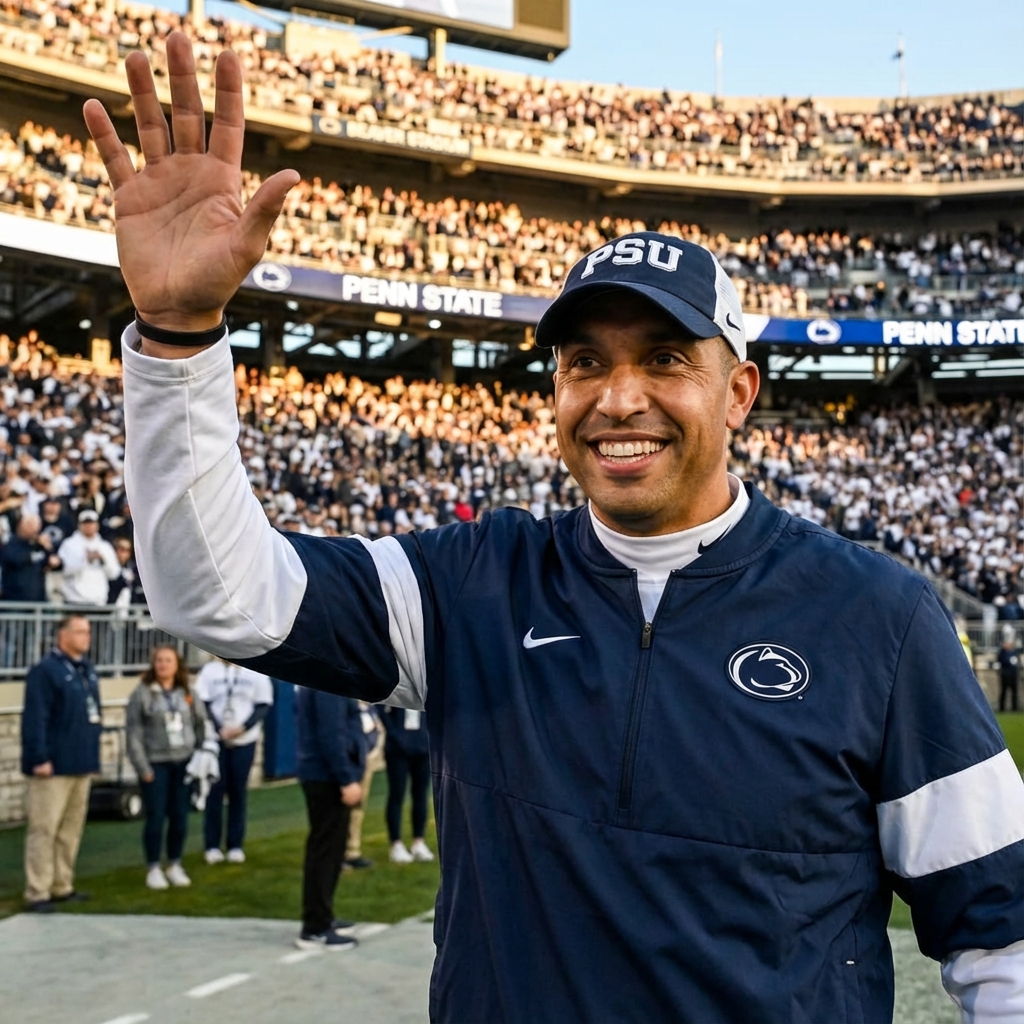
Penn State’s 2026 offense has a new backfield and tight end picture. Kaytron Allen joined the Washington Commanders through the NFL Draft, and Luke Reynolds transferred to Virginia Tech.
What Is Verified
Penn State’s current staff directory lists Taylor Mouser as offensive coordinator and tight ends coach. Rocco Becht transferred from Iowa State to Penn State after Matt Campbell took the head coaching job, bringing extensive starting experience from Campbell and Mouser’s previous program.
That connection is the most important verified schematic fact. Becht already knows much of the staff language and offensive structure, but Penn State still has to adapt it to a new roster, a new league environment, and different skill-position personnel.
Personnel Reset
Penn State cannot build its 2026 run game around Kaytron Allen: Washington selected him at No. 187 overall in the 2026 NFL Draft, as confirmed by Penn State’s draft recap and Commanders coverage.
Luke Reynolds moved to Virginia Tech for 2026. Penn State’s tight end options now include Benjamin Brahmer, Andrew Rappleyea, Gabe Burkle and other players on the current roster.
At running back, the current discussion belongs to James Peoples, Carson Hansen, Quinton Martin Jr., Cam Wallace, and the rest of the active room. At receiver, it belongs to active players such as Chase Sowell, Keith Jones Jr., Koby Howard, and younger competitors. Trebor Pena and Devonte Ross are 2026 NFL Draft departures, not current roster options.
Scheme Without Overclaiming
It is fair to expect more Iowa State influence with Mouser and Becht together in State College. It is not responsible to declare a full spread-passing identity, a fixed 11-personnel base, or a specific tempo before the staff shows it on the field.
The better wording is that Penn State’s 2026 offense should be evaluated around quarterback familiarity, transfer skill players, tight end usage, and offensive-line stability. Becht’s timing with Mouser helps the transition, but it does not remove the need to build chemistry with new receivers and backs.
Depth-Chart Stakes
The main offensive question is not whether Penn State has a clever playbook. It is whether the new personnel can execute it. The line has to settle around returning players and transfers. The backfield has to replace Allen and Nicholas Singleton. The tight end room has to replace outdated Tyler Warren and Luke Reynolds assumptions with current roster facts.
Spring and fall camp evidence mattered more than a January scheme label. The first five games provide a better basis for evaluating roles and usage, though a small early-season sample does not settle how the offense will develop.
Sources
Sources include Penn State’s current roster, 2026 NFL Draft central, and 2026 schedule and results.